A Flag is Thrown on Super Bowl Economics

Image

The Super Bowl has become the most profile annual event experience in the US…creating an unrivaled gathering place for entertainers, sports glitterati, corporate leaders, media, scene-makers…and 106 amazing athletes. For host communities the Super Bowl is all about the massive global profile and the economic benefits generated by the attendees and sponsors.

But last weekend the New York Times called for a booth review of the economic impact claims being thrown around about the Super Bowl’s contribution to the local economy. The thing is: no one seems to know where the $550-600 million economic impact figure being touted by organizers actually came, from let alone if its legitimate.

Even more interesting is the revelation during the NYT’s investigation that economists seem to have long dismissed the legitimacy of such claims for a variety of reasons.

In a recent blog posting, Seth Godin offers some insight into this mindset stating that “We keep coming up with new things to measure (like processor speed, heat output, column inches) but it’s pretty rare that those measurements are actually a proxy for the impact or quality we care about.”

Why should destination marketers care about this? DMO’s and the tourism industry in general continue to use economic impact numbers to measure their success and contribution to society as well as to validate their own community relevance…particularly when its time for budget reviews or for pitching the community on hosting major events like to Super Bowl. It doesn’t really matter how the legitimacy of those studies evolved but if they are now being routinely dismissed or worse, ignored, destination marketers need a new game plan for how to tell their story to their stakeholders. Fast.

Destination marketers do a remarkable job of developing and sharing powerful, emotionally-compelling stories about their communities. But, like the auto mechanic whose own car is poorly maintained, we struggle telling our own story in a way that people care about.

The flag thrown by the New York Times on Super Bowl (and other large event) economic impact studies should be a wake-up call to destination marketers everywhere who already know all-too-well that while data leads to conclusions, its an emotional story that actually invokes actions.

Lets hope we’ve got some time-outs remaining to determine what plays to call as we head into yet another two-minute drill.

Funding Challenges? Its Your Choice.

Regularly I hear from destination marketers that they don’t have enough money to do the job expected of them or that they are being outspent by their competitors. Which is probably why DMO leaders spend so much of their time focused on trying to grow their revenue base or, at the very least, ensuring what they have remains protected.

Hard to argue with that choice of leadership focus in any business.

But two media stories last week got me thinking that DMO leadership focus needs to, above all else, constantly define, redefine and steer the core business of the organization. Which means making tough choices that often involve saying “no more”.

The first is from Natchez, Mississippi (made famous by John Grisham) where a consultant concluded that the DMO there was primarily focused on managing and finding sponsors for local events and not on the job of actually inspiring visitors to visit Natchez. It’s a good thing John Grisham is so prolific.

The second story is from the Boston Globe that reported in great detail about how DMO’s wined, dined and buried in swag, meeting planner attendees at a recent meetings industry convention.  It was reported that one destination even went as far as providing “skinny jeans” to a client prospect.

In both cases I understand the need for destination marketers to keep their local stakeholders happy by supporting their communities and driving sales transactions. But are these the type of things that a high-performing marketplace organization should be doing to build a thriving tourism ecosystem in its community? Is this what Jeff Bezos or Marissa Mayer would do if challenged for funding and relevance?

Which brings me back to my point: if the primary business of your DMO is running local events, outfitting your client prospects in the latest fashion or even printing maps and brochures for your visitors, you will never have enough money to do the job. In fact, you’ll probably lose some or most of what you already have because eventually someone else will do these things better and more cheaply.

Like most businesses today, funding and capital are attracted to new ideas that confront disruption or define new market spaces for their brand. Why would a destination marketing business be any different?

Before destination marketers invest their time and local political capital in the quest to increase their funding, it might be a good idea to first banish low-value “legacy” tactics. And just like any start-up pitching investors, destination marketers need to have more than a spending plan…they need a vision for how they are going to evolve their business and brand to new levels of performance.

Many DMO’s don’t have a funding challenge. They have a business challenge. One that can often be addressed by DMO leaders asking tough questions about their current investment choices for making a real, sustainable difference for their communities. More often than not those choices start first with having the courage to stop-doing some long-standing habits that are now becoming vices.

Five Focus Factors for Destination Marketers in 2014:

It seems EVERYONE is publishing lists this year. One of my Facebook friends even shared that he was making a list of people he was going to cull from his group of friends at the start of 2014. I’m still waiting to hear back on whether I made the cut.

Destination marketers (and their publishing suppliers) also love to make lists. Some long. Some even longer. I read many of them and I have to tell you…there are lot of opinions and perspectives out there on what 2014 is going to hold for the world of destination marketing and travel in general. The lists I read are far from comparable and the diversity of opinion is true testament to how complex destination marketing has become and how high the stakes are. Or maybe we just make it that way to feel like masters of our own domain.

I too want to publish a “key focus” list for destination marketers in 2014. So…I waited and gathered as many lists as possible. I read. I curated. I combined. I synthesized. And I simplified. All so you can quickly and easily grab a couple of gems of information while waiting for your mochaccino latte at your local Starbucks and deploy at your convenience…or just write-back and say its all BS.

My Five Focus Factors for Destination Marketers in 2014:

1. Destination Advertising Needs to Be Re-Thought:

ImagePrint and broadcast media placements should not be the core of your advertising strategy. Nor should banner ads. They don’t work. They are a waste of money unless you have money to burn because audience trust and recall of traditional media executions and channels are at an all-time low. There are plenty of other powerful options (check out interactive print).  While you’re getting really innovative with your plan I also suggest you develop an advertising “stop-doing” list.  And then have the courage to follow-through on both of them.

2. Destination Marketers Need to Become Expert Content Marketers:

ImageDestination marketers are great story-tellers. We know and love great stories about our destinations because we are experts on them. Stories need to be thought of as content that drive engagement, not “strategic messaging” that drive transactions. We need to be focused on ways to develop and showcase them (HINT: the best ones are in our own backyards) to customers. . Marriott recently announced a series of content marketing partnerships for this very reason. But content marketing for destinations cannot be just about our destinations. We need to develop content around the needs of our customers, not our stakeholders. So if we’re a beach destination and our customers are scuba-divers, we need to be creating and sharing remarkable content relevant to scuba-divers regardless if its about our destination or not.  Its not sell-sell-sell. Its engage-engage-engage-pitch. (Or as Gary Vaynerchuk says: “Jab-Jab-Jab-Right hook”.) DMO’s need an internal staff team or outsource partner focusing exclusively on this.  (Here’s some great tips on effective content marketing.) And…yes, you can afford it because you’re going to be spending a whole lot less on print and broadcast media.

3. Mobile. Mobile. Mobile.:

ImagePC and laptop sales continue to plunge while smartphone sales (and now wearable tech) are booming. If your marketing initiatives aren’t developed to be mobile-centric (mobile website, apps etc) you need to have a serious conversation with your agency and/or advisors. Over 70% of leisure travelers use their smartphones to engage with social media while on their trip. For business travelers and convention attendees its even higher…which explains why the biggest growth area in advertising is for mobile platforms. Meeting professionals now design their programs for mobile engagement by attendees which means you can never have too much bandwidth in your community. If your choice is between printing something and creating an app or a mobile function, ditch the print.

4. Get Serious About Social Media Or Else:

company_socialmediapieSo much has been written about this, I’ll be blunt: Social media is not another advertising channel in which to sell tickets or packages. Its about conversations and engagement with your customers and communities. Destination marketers need to think about it as an outbound content platform and an inbound service platform. That means dedicated management and expertise – 77% of F500 companies already do. And for DMO CEO’s: resistance is futile. You need to do this. It gets you closer to your real customers.

5. Measuring Success Beyond Transactions:

This one is not easy because it involves a multi-level culture change. DMO performance has typically been measured through transactional metrics: room-nights, delegate days, visitor service numbers – measures that people outside our industry cannot relate to). This made sense when the DMO was the major domo in transaction and relationship channels. Technology has disruptively changed all that and the DMO is now regularly bypassed in both channels by technology platforms that manage buyer-seller transactions faster and more effectively than any DMO. Find new strategic measures of success. For example: Collaboratively decide on the 10-20-30 strategic events (forget the transactional ones) that can drive economic development (according to the community strategy) in your community and develop plans to go get them. And for the strategic ones you’ve already secured be their partner in story-telling to drive attendance and visibility. This is what Tourism Vancouver and the Vancouver Convention Center did when they convinced Chris Anderson to move TED to Vancouver. Start a destination development plan and co-create a vision of success with your industry, your community and your customers. Then go make it happen.

BONUS for 2015: Envisioning Destination Big Data 

ImageI published a blog posting in 2013 about this as a huge opportunity for DMO’s to enhance their value proposition in their ecosystems. Other industries (e.g. healthcare) continue to make this a cornerstone strategy yet, beyond a few inspired start-ups, credible destination-level big data on tourism and meetings/events is scarce.  DMO’s should use 2014 to think about their role in becoming THE Big Data enterprise for their destinations. Consider how it could be structured. Consider partners and investors. Talk to experts. But do it now because 2015 might be too late.

2014 is going to be an awesome year for destination marketers. Business is strong and there are more opportunities than challenges…a perfect year to make something remarkable happen.

What Business Are We In?

It is perhaps the simplest yet most provocative of business leadership questions.

Twenty-five years ago when I was just getting started in the world of destination marketing an industry titan of the day told me that at its very core, destination marketing was essentially a “make and sell” business…and you were either a maker or a seller.

Clearly the business of the destination marketer in those days was exclusively as a seller. We were there as an intermediary to sell whatever the “makers” in our destination made for visitors to buy…no questions asked.  The makers were the hoteliers, attractions, bus companies, restaurateurs etc who “made” the stuff that we were directed and expected to sell.. Our domain was the sales channel, the client relationships and the sales scoreboard that we controlled…or at least thought we did.

This was all very simple and clear to everyone in the industrial tourism economy of the day.

Then the world changed.

PROBLEM: Fast forward to today’s networked economy, the destination sales channel has become complex with more intermediaries on one hand and more ways for clients and makers to bypass those intermediaries on the other. Disruption, as it has done for so many other industries, has compromised the value of the traditional sellers’ sales channel by commoditizing those legacy relationships. (Check out: Selling is Not About Relationships from the Harvard Business Review) In fact its the DMO’s shifting role away from the dominant seller in the traditional destination sales channel that is the source of most of today’s DMO role relevancy challenges. (Here we could get into a juicy debate about the current disconnect in how DMO’s are measured in relation to their role in the sales channel…but that’s a whole other blog posting.)

At the same time, those very same forces of disruption to the sales channel are also blurring the lines between “sellers” and “makers” everywhere. Here’s why: In an industrial economy it was the “makers” who dictated what got sold to the customers…because they could. This is no longer the case. It’s now co-creation and collaboration between “makers” and their customers/stakeholders in successful businesses that now drives how and what gets sold in today’s disrupted sales channel. And it is increasingly the role of the destination marketer to bring the customer into the collaboration conversation about what gets “made” as part of the destination experience.

SOLUTION: Why not be masters of your own domain and change the rules of the game: The “sellers” can now also become the “makers”.

Destination Marketing 3.0: Less transactional selling. More experience development.

This is not to say that destination marketers are going to extract themselves from the sales channel in the process. But as the DMO’s role in transactional sales becomes less relevant, leading the collaborative development of a destination’s experience is a significant business opportunity for high-value relevance. Ensuring the fingerprints of current and future customers are all over any kind of destination development plan or experience will unquestionably drive sales at the strategic level. And by getting industry (the makers) and community stakeholders also engaged in the process, the end-to-end alignment will drive long-term demand for the destination. Ding. Ding. Ding.

The good news is that some destinations are already recognizing the value of taking an elevated role in destination development. Tourism Vancouver earlier this year completed Vancouver’s first-ever Tourism Master Plan. Image Destinations as diverse as Winnipeg, Curacao, Nairobi and several states in Mexico have done the same. Some DMO’s like the Las Vegas Convention and Visitors Association have taken a leadership role in shaping a transportation master plan for the future of their state…a critical element for any successful destination.

Other destination marketers are going even further into experience development (something I call “Destination Animation”) by being founding partners and/or equity investors in actual destination experiences. We all know what SXSW has done for Austin, Texas as a destination and a brand. In Grapevine, Texas (pop. 48K) the DMO not only are founding partners in several community events (attracting 1.5 million visitors each year in the process) they also own and operate a train experience. urlIn same vein, the Greater Palm Springs Convention and Visitors bureau is exploring the development of a large, multi-day event in the community to target out-of-town visitors.

Today’s cluttered destination sales channel coupled with the urgency to introduce co-creation and collaboration into the destination development process, creates an opportunity for destination marketers to shift from “sellers” to “makers” and create significant value for their communities. But it all starts with having the courage to ask the simplest of questions: “what business are we in?” and then having even more courage to pursue the answer.

Destination Marketing 3.0: The Best Story (of WHY) Wins

The tourism and meeting/events industries have long lamented that they are misunderstood and under-appreciated, particularly when it comes to government policy matters.

So…why is that?

Some say it’s because locally, nationally and internationally we are hopelessly fragmented into a thousand different tribes and voices competing with each other for attention (and cash) from stakeholders. Lincoln’s “house divided” speech comes to mind. Fortunately the meeting/events industry in the US realizes this and is rallying to create a united voice.

Some say it’s because hospitality is in our DNA and we try to get things cleaned-up with a silk handkerchief instead of a chainsaw. Roger Dow, president and CEO of the US Travel Association, often sums it up by saying “The industry behaves like the glee club when it should behave more like the football team.”

Some say that in the big scheme of things the trials and tribulations of an industry that all-to-often allows itself to be embodied by international air carriers, cruise lines, lodging companies, celebrity chefs and red carpets, aren’t what’s keeping the world up at night.

It’s probably all of the above and more.

But boil it all down and you come to one simple insight: Our story sucks.

You know our core story: “We are a $multi-trillion global industry employing millions generating $billions in annual tax revenue so we deserve respect.”

Now, there is no doubt that this story is true and significant.

We also know that every other industry of significance uses the economic impact story-line. Its become table stakes to get into the advocacy game. But if everyone is using the same story-line, it’s no longer remarkable or memorable.

 “Whoever tells the best story wins.” – John Quincy Adams

If we apply Simon Sinek’s wonderful Golden Circle model we quickly conclude that our current story is all about the WHAT and that truly inspirational leadership story-telling starts with the WHY…as in WHY SHOULD WE CARE? WHAT = Pragmatic. WHY = Emotional. Guess which approach best inspires action?

Here’s a thought: We need a story that gets more than just economists excited about us. One that doesn’t measure our worth by how much money we spend but by how much we change people’s lives.

And herein lies an opportunity for destination marketers to carve out some local emotional real estate and build some important grass-roots community cred: Find and share the local industry’s story of WHY.

As marketplace story-teller we’re in the business of creating great stories that inspire people to visit our destinations or select it as an event location. So how about applying those very same story-telling skills in our own communities to make them care about WHY an industry they often take for granted makes their lives better? DMOs are closer to the emotional experiences and realities of our industry WHY than anyone. And since all politics is local, starting with local hearts and minds will likely get better traction.

Let me share an example:

When I was in Toronto we were honored to host the 2006 International AIDS Conference. It was a huge conference with 26,000 attendees, keynotes by Bill and Melinda Gates and Bill Clinton, $25 million in local spending etc. Like most DMOs we touted the economic impact of 26,000 people on our taxis, restaurants, hotels, shops etc. It was a one-day story and was soon forgotten. The real story of that conference, the one that people cared enough about to share and remember, the one that the media covered endlessly, was how the conference brought together AIDS researchers and hospice workers from third world countries with their Toronto counterparts to learn from each other. The “best story” for our community was not about the economics, it was about how the shared learning from the conference would save lives. This was the WHY that people who mattered cared enough about to act on.

We got thank-you’s from local politicians, doctors and nurses because of that story. I can’t remember getting anything from the souvenir shop owners.

Business Events Sydney (the DMO) examined this at a more empirical level in its 2010 Scoping Study of Business Events: Beyond Tourism Benefits.

Destination marketers must play a pivotal industry and community leadership role by harvesting and sharing the best stories of WHY, not just WHAT. By expanding our story-telling focus beyond the marketplace to include the hearts and minds of our internal communities, the tourism and meeting/event industries will be better positioned for the inevitable policy challenges.

Because advocacy is no substitute for a story that sucks.

What Destination Marketing Organizations Can Learn From Apple’s Recipe For Disruption

Last week in this space I showcased the Jeff Bezos recipe for disruption – essentially an internal management pre-emptive strike to prepare for the day in which even Amazon’s most profitable business lines/models will be disrupted to the point of irrelevance.

In that spirit of learning, I challenged readers to share their opinions on how they might disrupt an existing DMO business line. As expected, there were no takers as it was a rhetorical question. I did get one perspective (thank-you Susan Radojevic) on the bonus question about the struggles destination marketers have with making disruptive choices.

As if to validate the real-world urgency for such an exercise, on Wednesday Apple put its disruption cross-hairs on Microsoft’s core (pun intended) Windows and Office cash-machine business model by offering its new MAC OS X operating system and iWork office suite for FREE. Windows alone is a $19 billion business line to Microsoft. And now the new benchmark price for its primary competitor’s product is $ZIP. Mavericks_Free-380x253

Disruption has no respect for legacy, in fact it feeds on it. Its also part of many business playbooks today.

It’s doubtful Microsoft can afford to match the price-point. But they have to do something. They’ll probably look for other value opportunities for their massive customer base…which might explain why Microsoft decided to buy Nokia’s phone business last month. The phone business seems to have done quite well by Apple.

For destination marketers the lesson is provocative: when (not if) your core business gets disrupted you better be prepared to find a new business opportunity. That’s why the Bezos exercise is so relevant. Unfortunately for many DMOs some of those business lines and value propositions have long been disrupted (e.g. visitor information centers) and the exercise might be an after-the-fact experience. That said, what are some alternative Destination Marketing 3.0 high-value business opportunities for DMOs…presumably in a calm blue ocean where there is currently no competition?

To me, one of today’s most compelling Destination Marketing 3.0 opportunities is the harvesting, curating and analyzing of the mountain of data that gets generated by the thousands of visitors and event attendees that descend on a community each and every day. The value to local hoteliers, attraction managers, restaurateurs, transportation companies, investors, public safety agencies etc of precise and timely information on the visitor population is priceless. It could help direct their staffing, purchasing, pricing, investment location decisions. Now, while there will be those that see this having the potential for another Big Brother privacy intrusion (particularly for those with something to hide), BIG DATA is now a reality for industries everywhere. So why not destination marketing? And…no one else is doing much of it…yet.

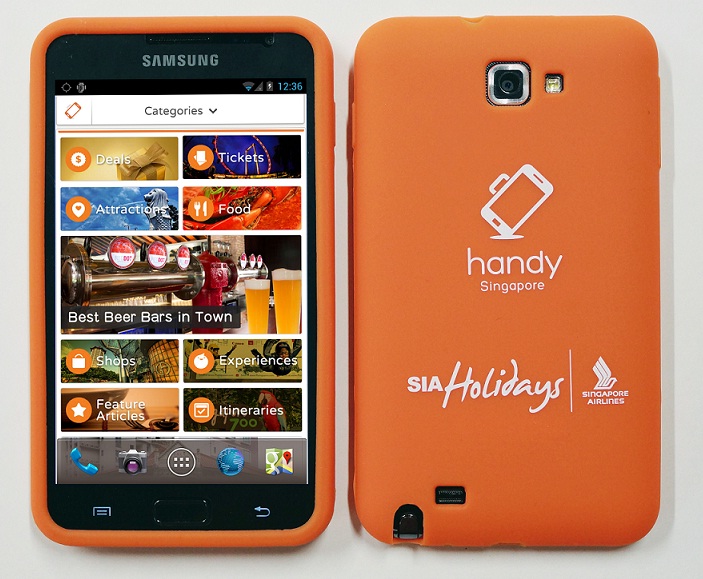
The one example of an embryonic destination BIG DATA play that I have found is, not surprisingly, in Singapore. Visitors to Singapore can now rent a Handy smartphone for $15SING ($12USD) per day during their trip. The Samsung Galaxy phone comes pre-loaded with an armada of visitor-relevant apps (so much for visitor information centers), local news, special user discounts AND the daily cost includes all of your text, voice and data consumption. (Whoa! If you’ve ever traveled overseas with your smartphone you know what a huge value this is to stay connected at home.) handyPhone

The visitor gets a whole lotta value from a Handy smartphone. AND…because smartphones are the mother lode of personal data…in addition to the rental fee, Handy gets priceless detailed and aggregate data about the travel habits of Singapore visitors that in can sell to whomever. (Nothing I saw on their website precludes them from selling the accumulated data.)

Given DMOs are highly-trusted by visitors for privacy and information integrity, a BIG DATA play (through some form of strategic partnership or joint venture) would seem to be a huge opportunity to create the proverbial WIN-WIN for everyone: the DMO enterprise, visitors/event attendees, destination businesses and public service agencies. All brought to you by the local DMO.

In the face of ongoing disruption, destination marketers need to explore BIG DATA as part of their Destination 3.0 roadmap. I am obviously over-simplifying the operational complexities of a BIG DATA destination play but someone is going to figure it out because the value of visitor is priceless to so many. And by rights it should be destination marketers who make it happen and own the gold.

Destination Marketing 3.0: Do You Have the Courage to Destroy Your Own Business?

One of the premises of this blog space is that today’s destination marketers, faced with substantial relevancy challenges, need to reboot themselves. And over the last month I’ve offered a number of personal perspectives on what I believe that looks like, often citing some awesome examples of what some DMO’s are doing to evolve in the face of disruptive forces and challenges to their long-standing value proposition.

But in speaking with destination marketers and, more importantly their customers, what I keep hearing is that most destination marketers are more comfortable avoiding a disruptive change strategy than they are at activating one.

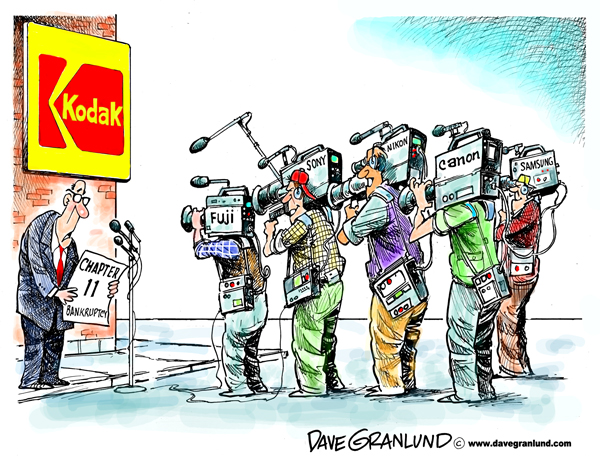
ImageThere are plenty of examples of industries (e.g. retail music), companies (e.g. Kodak) and professions (e.g. travel agents) whose marketplace relevancy was destroyed by disruptive change because they avoided making the necessary disruptive choices to ensure their ongoing relevance.

At Amazon, Jeff Bezos has his own recipe for disruption. Inspired by Clayton Christensen, one of the world’s foremost experts on disruptive innovation, Mr. Bezos actually challenges members of his leadership team to devise strategies to destroy their own business lines and then put the disruptive strategy into play before someone else does. Can’t wait to see what he does to the publishing industry with his Washington Post acquisition.

So…this week, rather than continuing to share my perspective on what higher-value, higher-relevance destination marketing looks like, I’m going to throw-out a challenge to see what comes back:

What would you do to destroy an existing DMO business line?

If you see that challenge as a little too provocative, the alternative challenge is this:

Why do many destination marketers struggle with making disruptive choices for their businesses even with an acknowledged relevancy challenge?

In this blogspace I’ve extolled the virtues of engagement to create rich conversations on opportunities and challenges. So lets have one shall we.

Bring it.

Destination Marketing 3.0: Rebooting the Destination Reputation

Last week’s posting on destination advertising generated some great interest and feedback as expected. Coincidentally, Fast Company ran a story earlier in September entitled “Can Advertising Bring back the Rust Belt” highlighting the efforts of some destination marketers and civic leaders to reboot their destination reputation in the minds of their visitors and also their own residents.

This is obviously no small feat given the magnitude of economic and social challenges cities like Buffalo, Cleveland, Detroit et al have recently endured.

Image

The only thing tougher than rebranding a destination’s image and reputation after a high-visibility incident or pursuant to a community reimagining is doing nothing at all. And for destination marketers this is simply not an option.

The traditional approach to a post-crisis rebranding in a Destination Marketing 1.0 world has been to make a bigger, more credible and compelling noise than whatever noise the crisis tainting the image and reputation of the destination had made. Advertising and public relation machines get mobilized to dominate the key media channels with appropriate image-repair messaging. And after the media onslaught, typically with the help of high-cred celebrities or high-visibility politicians, natural order eventually got restored and the destination inevitably considered a rebranding to develop a new story…far removed for the place from which the image trauma emanated. Essentially a destination reboot.

During my time as CEO of Tourism Toronto (the local DMO) this is exactly what we did. In 2003 we faced North America’s first urban epidemiological outbreak courtesy of the SARS virus, costing the community $Billions in lost tourism and business event revenues and a serious black eye to our reputation as one of the safest mega-cities in the world. Our community went as far as hiring the Rolling Stones for $5 million to play a FREE outdoor concert for hundreds of thousands of people and global media coverage right in the heart of Toronto. Strategically, this was our “all-clear signal” to show the world that if it was safe for the Stones, it was safe for everyone.

It’s only rock n’ roll but it sure worked. For residents and locals alike.

For communities that undertake a rebranding to reboot their personae in-line with a new community visión or investment, the challenge is similar: créate enough profile, compelling and relevant new story inertia to displace what´s already entrenched.

That was then.

In today’s world of social media, renegade bloggers and tweeters, fragmented media landscape and low-credibility everything, the Fast Company story asks: can destination advertising and rebranding really make a difference in some challenging community circumstances?

Consistent with last week’s posting I believe destination advertising is not the magic bullet it once was or that some still feel it is. It’s simply too costly and complex today to achieve message control and domination through media or even in adjacent space channels…particularly if there’s been a high-visibility destination reputation trauma. And then there’s the credibility issue.

I strongly believe that destination marketers can and must play THE leadership role in managing their destination brand, particularly after some kind of reputation trauma or when a destination rep reboot is in the wind. In fact, it should be a primary role and raision d’être for the local DMO. But they need to go beyond advertising and traditional communications tactics to tell the story.

At the very least they need to engage with their customers/visitors about the reality of their reputation by asking them to help shape the story and ultimately the brand. This is not a focus group or survey panel. This is about starting a permanent ongoing marketplace conversation because managing a destination reputation never ends.

The Fast Company article showcases some great (and not so great) leadership examples of local DMO’s managing destination brand reboots. But it also suggests that destination marketers need to take engagement beyond the customer/visitor realm by directly engaging local residents themselves in the conversation: “Effective marketing campaigns do prove useful for mobilizing a civic conversation about what’s new–and what’s old and can be discarded.”

BOOM!

Engaging the local community (not just local tourism industry stakeholders) in the conversation about the destination story is a gift-wrapped leadership opportunity for DMO´s looking to elevate their community profile and to demonstrate their relevance. After all its not the DMO’s story or even the tourism industry’s story. Its the collective stories that make-up the experiences of the people in community that are the real, enduring brand essence…the ones that people will build a reputation monument to regardless of the circumstance. And they are also the ones that people talk about and share with others well-beyond any advertising campaign. Who could forget when someone in Las Vegas decided the best way to a destination reboot was to impose a G-rating on its brand?

What does engaging the local community it look like? How about locally crowdsourcing stories, images and videos from the local community? The Canadian Tourism Commission asked an entire country for their stories and got 65 hours of video for authentic guidance. Or just ask them via social media to share their stories…the good, the bad and the ugly…and ideas about how and where their community can be remarkable. Those stories and images are pure gold. The key is to start it happening before a crisis or destination reboot.

Destination Marketing 3.0 leadership today is increasingly about brand reputation management rather than sales transaction management. And if today’s marketplaces are indeed conversations, the destination marketer has to extend engagement conversations about the brand to the wider local community, making them an equal part of the story with the marketplace. That’s because today destination authenticity is designed organically on the street, not in a lab.

Destination Marketing 3.0: Less Destination Advertising. More Customer Engagement.

Everyone has an opinion on advertising. And for destination marketers, destination awareness through media advertising has historically been seen as the ultimate symbol of the art, science and magic of their craft.  When new ads are released, press conferences are called, Mayors speak, critics rail. All because broadcasting the destination story to the world is a point of community pride and because the ads are what traditionally is seen by the community as bringing people to town. Which would explain why according to Destination Marketing Association International (DMAI) DMO’s currently spend 51% of their leisure marketing budgets on media advertising – two-thirds of that in print media.

And so when there are challenges to industry financial support, the response is usually: “we have no choice but to cancel the advertising campaign.”

Modern day case-in-point: when Northern Ireland’s tourism marketing efforts were confronted in 2011 with a government-mandated 50% reduction over two years in its media advertising spending (but not its total marketing budget), tourism board leaders warned of a “significant risk” of not making tourism targets.

But here’s the thing: total visits to Northern Ireland since the media advertising reduction are virtually unchanged and visitor spending is actually up 7% through July 2013. And when you consider that Northern Ireland’s primary visitor market is the Republic of Ireland to the south, whose well-chronicled financial woes are epic, this accomplishment is heroic.

The advertising business is also going through its own upheaval driven by a fragmented and diverse media landscape and also the fact that its levels of distrust are unprecedented. Which leads one to the question: why then do destination marketers and their stakeholders still make advertising their primary (at least according to DMAI) go-to marketing tactic? I’d love to hear some perspectives on this…!

PROBLEM: Media advertising for destinations is expensive and has questionable effectiveness.

SOLUTION: Less destination advertising. More customer engagement.

We know that people vest their trust in recommendations from people they know. They want authentic, relevant opinions and will engage in unbiased forums to share their perspectives and experiences for the benefit of others using social media. The incredible affinity for Yelp and TripAdvisor are testimony to this reality.

Unfortunately many destination marketers use social media platforms as merely another broadcast media channel to broadcast their story. Fail.

Engagement is about synthesizing the customers’ perspective, needs and story into your business/enterprise/destination through ongoing conversations in places and times of the customers’ choosing. It’s not about luring them into a transaction decision with bright shiny objects or carpet-bombing them into submission with advertising.Image

Consider the graphic to the right created by LeadSift. They have identified that leisure travelers are increasingly using social media during the three phases of their trip: Planning (before), Vacation (during) and Honeymoon (after) – a reflection of the statement that 92% of said travelers trust recommendations of social/family connections over advertising.

Destination marketers need to deliberately inject themselves into these social media conversation places and spaces in each of the three phases to stimulate discovery, deliver on-site visitor support, encourage further experience-sharing and then harvest the resulting Destination Intelligence (DI) as it relates to their destination.

How do destination marketers find these conversations? Tools like Radian6, LeadSift and others make it easy to locate and engage with your customers where conversations are happening. And they are whole lot less expensive than any ad placement and connect you to where conversations about your brand or business category are taking place.

What does an all-platform social media customer engagement strategy look like operationally? How about something like this:

For Starters: Every destination marketing organization should have a highly accessible (read “Mobile” here) social media forum where conversations from the major platforms can be aggregated for all to see and share. Its also an easy place for visitors conversations to take place.

Planning Phase: A destination “Engagement Team” is created and assigned to respond to potential customer needs, objections and provide responses/resources via social media as they plan. The related DI is shared back to the destination community.

Vacation/Event Phase: Since visitors/event attendees to a destination are now sharing their remarkable experiences (85% of leisure travelers use their smartphones while abroad) while onsite, a the Engagement Team can make sure it gets shared in the right places for more potential customers to see.  And if there’s a not-so-remarkable experience taking place, the Team can offer some form of immediate direct service intervention on behalf of the destination.

Honeymoon Phase: With almost half of leisure travelers posting hotel or restaurant reviews after their trip, the Team can aggregate the DI (e.g. 65% of hotel reviews in December were more than 4/5) and share it for community action and certainly in social media places where customer planning conversations are taking place. They might even send simple “thanks for visiting” messages.

If Nordstrom was in the destination marketing business, this is how they would deliver customer engagement. At multiple touch-points during the customer buying cycle.

Engagement that unleashes the voice of the customer, not broadcast advertising, is the key to creating powerful awareness, trust, loyalty and ultimately demand in the destination marketing 3.0 ecosystem. All of which are valuable and shareable across social media platforms.

Is this easy? Not at all…in fact big brands like McDonalds and Coca-Cola have failed rudimentary customer engagement tests.

Is it affordable? Absolutely. Cutback on a couple of flights of advertising and you can find yourself actually engaging with your customers instead of pitching to them.

Destination marketers need to make authentic customer engagement a core competency of their organization and hallmark of their brand. The great news is that some destination marketers are figuring it out.

Marketing Challenges International’s recent report “Social Media Marketing for Global Destinations in the Meeting and Convention Industry” provides some excellent examples from Austin, Seattle and Phoenix about how their destination marketing organizations are pioneering the use of “social concierges” to engage with meeting and event attendees while in the destination – providing information and solving onsite service opportunities. This is where it has to go. To make a difference. To be relevant.

After all, anyone can buy advertising. And shouldn’t destination marketers be spending more time with their customers than with their advertising agencies?

Destination Marketing 3.0: Less subsidization. More innovation.

When I developed the Destination Marketing 3.0 blueprint, this week’s blog posting was supposed to be about the role of advertising in the future of destination marketing. Its juicy…probably controversial…and will wait for another day.

Earlier this week I came across two separate news stories that showcased the waning legacy of Destination Marketing 2.0 and rising promise of its 3.0 successor.

The first story was about deliberations around a series of “tourism grant” applications submitted to the local destination marketing organization in a medium-sized US mid-western community. It has not gone unnoticed by a wide variety of community arts, sport, service, publishing groups and more that with travel industry revenues on the rise, their companion coffers from taxes and levies (e.g. bed tax, transient occupancy tax, destination marketing fees) are also lush with collections. And everyone is rushing for their share of the spoils in the name of “tourism partnership marketing”.

Having been in that role at a DMO, I can tell you that even being in a position that is empowered to hand out money in the name of tourism marketing – whether its called a grant, a sponsorship or a partnership investment – is a no-win situation. You are ALWAYS going to create enemies (because you can never have enough money to please everyone) and you’re never going to make something remarkable happen for your business because your ability to direct the investment evaporates once the check is signed.

Lets call it what it is shall we? It’s a direct subsidy and the local politics of managing subsidy programs, despite the most noble of intentions, distracts destination marketers away from their necessary customer-centric focus. Yet…as the news story confirmed, destination marketers remain caught in the politics and under-achievement of the subsidy quagmire. To many communities, those subsidies are the only value destination marketing organizations deliver for them. Just try to wean them off said subsidies. And you thought social security was the ultimate entitlement.

This legacy practice of a time gone-by needs to get added to the destination marketing 3.0 stop-doing list right away.

Directly underneath was a story from Singapore. It seems that this summer the Singapore Tourism Board created a $ING5 million “Kickstart Fund” that is described as an incentive scheme designed to support untested yet innovative lifestyle events and concepts with tourism potential.” The fund not only awards up to $75K per investment but will provide mentorship assistance from industry leaders to these local industry entrepreneurs and innovators to help them better understand the tourism industry opportunity to grow their business. The advisory panel of the fund also includes business innovators from outside the tourism industry to ensure venture investor disciplines are applied to support investment decisions.

Rather than handing out subsidies to build political capital in the community, the STB has chosen to leverage Singapore’s innovation capital and become a venture capital investor in its own tourism industry – helping support the grass-roots creation of innovative new tourism experiences and services to the benefit of its customers that ultimately add value to its destination brand and revenues to its tourism industry.

Which is what destination marketing has always been about.

Now…before anyone raises their hand to say: “Well…that’s Singapore…we’re not like them. It wouldn’t work here.” Really? People that say/think that are dismissing the spirit of innovation that exists in each and every community that has a tourism industry. The opportunity for destination marketing 3.0 is to look outward, beyond its traditional stakeholders and today’s transactional mindset, and connect the local innovators, the entrepreneurs, the dreamers to the potential that exists for them in the tourism industry in their own community. If that requires cash, great. If it needs mentorship, perfect. If it needs a tourism industry hackathon to be organized, awesome. At the very least it requires the courage to make a formal commitment, with the appropriate venture investor mindset and disciplines, to making investments in local tourism industry innovation a priority to drive destination business in the long-term.

NY Times columnist Tom Friedman says we live in a world that rewards imagination. If destination marketers are looking for a chance to show new community leadership and marketplace relevance, this is a gift-wrapped opportunity to rise above short-term transactional thinking for a bigger vision of the future of the destination.