
Destination Marketing 3.0: What Problem Should Destination Marketers Be Trying to Fix? – Part Two

Last weekend as I watched the Dallas Cowboys exhibit a frightening lack of courage to act (unlike Johnny Football) at the moment of truth, I came across a June 2012 article in Fast Company called 7 Ways to Disrupt Your Industry. Two of the seven suggested disruption strategies soundly resonated with me as crucial parameters for the Destination Marketing 3.0 opportunity:

  • Eliminate your industry’s persistent customer pain points; and
  • Dramatically reduce complexity.

Ding. Ding. Ding.

PROBLEM: Sales and distribution channels are overly complex and expensive. Lets face it, the business of travel and events is over-engineered when it comes to the GSD (Get Shit Done) imperative. Sales channels are complex with multiple intermediaries, lack of pricing transparency, hidden commissions and fees. Distribution often involves an armada of diverse businesses and stakeholders, each with their own objectives, that must be gently herded and precisely aligned without exposure to the customer.

Sure, it is what it is but why are we surprised? The whole ecosystem was designed by suppliers to make suppliers’ lives better, not the customer’s.

Together these are significant customer pain-points, creating undue stress and additional costs for all – a perfect industry landscape for disruption – that someone with the courage to act in the best interests of the customer has to come to grips with.

SOLUTION: Less selling, more connecting: Customers now want direct transparent connections to marketplace options in order to GSD.

On the immediate stop-doing list for destination marketers is getting out of the business of directly selling travel experiences, products, rooms etc. Eliminate complexity and clutter! Customers today have unrestricted access to effective and trusted sales transaction marketplace platforms (e.g. Citypass, Uber, OpenTable etc) that do it better and less expensively than a destination marketer.

While some destination marketers already use Online Travel Agent (OTA) booking engines on their websites to sell rooms, its time to go further.

The Destination Marketing 3.0 value opportunity is for destination marketers to develop new direct sales and distribution partnerships with these transaction marketplace platforms and connect THEM directly to the destination’s customers. This reduces channel complexity and cost and gives customers direct transparent connections to do business with the destination.

For example: Event professionals are always looking for unique venues for their attendees in the host destination. It is typically a time-consuming, high-risk proposition requiring a trusted local intermediary (DMO or DMC) to get it done. Not any more. In the meeting and event space, businesses like FROOMZ (a company I currently advise) have developed hyper-local direct connection marketplaces for specialized venues that planners can now search and directly connect to according to their specs and business objectives. There are also similar hyper-local marketplaces for catering (CaterBid) and short-term meeting space (Liquidspace).

With the profile of the travel and events industry growing in destinations everywhere, start-up businesses are coming on-line regularly to serve visitors and event professionals in their communities. Community hackathons like these in Tampa and San Francisco are incubators for new tourism and event services. I would LOVE to see a destination marketing organization sponsor a hackathon specifically for the travel and events business in their community. Destination marketers would do well to develop a portfolio of trusted hyper-local partnerships with these marketplace and service developers instead of competing with them to better serve their customers.

A huge opportunity for Destination Marketing 3.0 is to eliminate customer pain by reducing the complexity inherent in the business of travel and events. Getting out of the sales and distribution channels by supporting the development of direct customer connection marketplaces is one way to do just that.

Doing it will allow all of us to GSD.
Destination Marketing 3.0: What Problem Should Destination Marketers Be Trying to Fix? – Part One

From the Phoenician maritime traders of 1000BC to Apple today, at their very essence successful businesses have focused on providing a uniquely compelling solution to an unfulfilled customer need or unsolved problem. (Seriously…a fingerprint reader?)

As destination marketers struggle to define their role and value proposition these days perhaps we should start by asking ourselves: what problem should we be trying to fix? (HINT: The answer is not about securing more money or respect from government.)

To properly tackle that not-so-rhetorical question, its worth reviewing some historical fundamentals. At its core destination marketing has traditionally been about providing three compelling solutions to the information and experience needs of travelers/purchasers of travel:

  1. Marketing and promotion: Showcase and distribute compelling information to potential visitors to create awareness and interest in the destination.
  2. Relationship connections: Connect local vendors/suppliers with potential customers planning to visit the destination.
  3. Visitor Servicing: Direct visitors to local experiences and vendors once they arrive at the destination.

Lets look for a brief moment at how destination marketing evolved over time. Now…I am not sure anyone can categorically provide the definitive historical timeline on how destination marketing evolved so let me offer my own version that I’ll stick to until someone tells me otherwise…

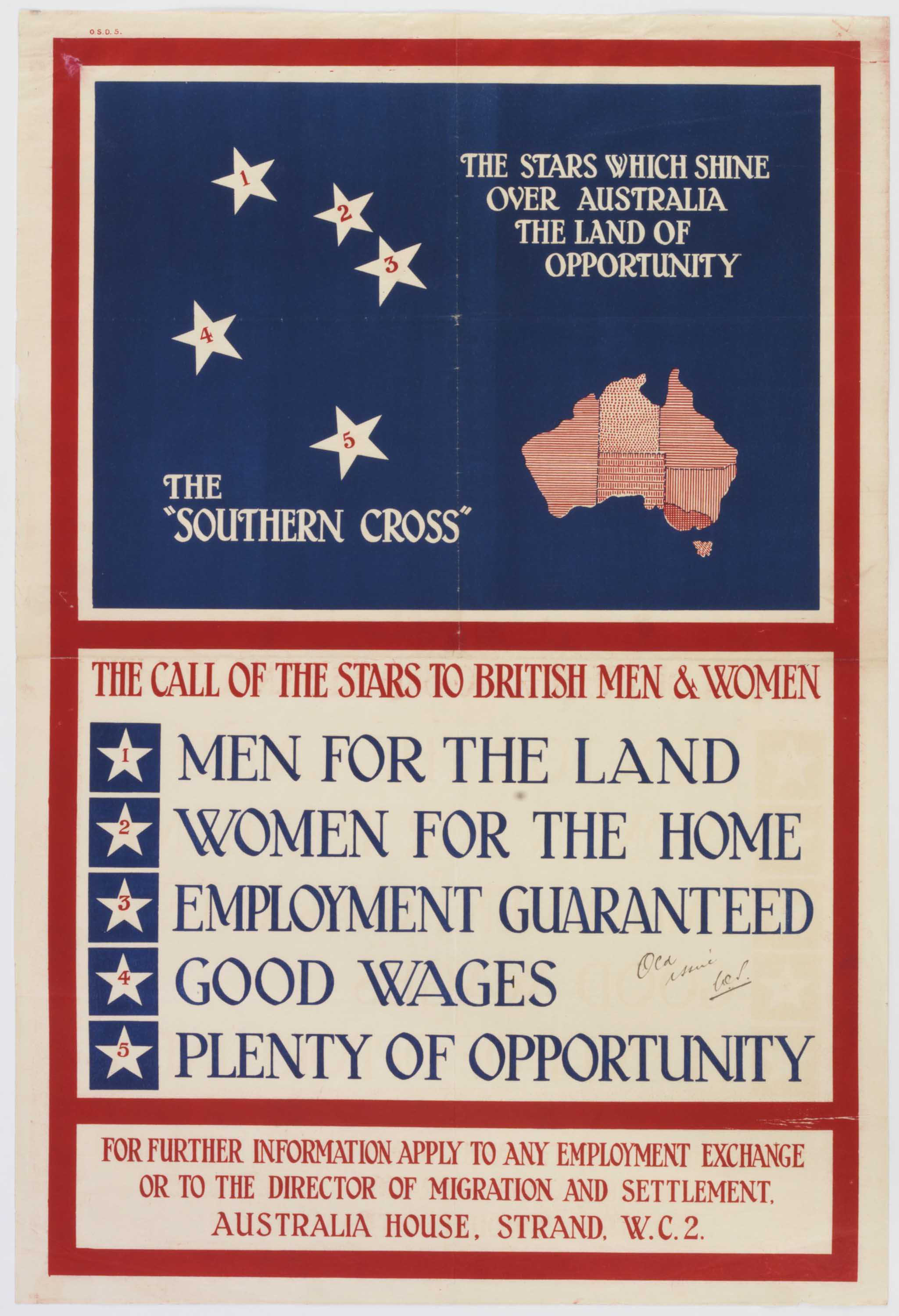
Destination Marketing 1.0 (circa 1900): Before there was a travel industry, there was an immigration industry that literally built nations and economies. Populating expansive far away countries was a problem for new governments trying to build a nation from scratch. Southern_Cross_-_call_to_BritishGovernment and corporation-controlled destination marketing played the crucial role in enticing prospective settlers through posters, newspaper advertisements and lectures (the communication channels of the day) to relocate to places that few had ever heard of with compelling value propositions, playing to their target audience’s need for a better life than the one they were then enduring.

Destination Marketing 2.0 (circa 1930): The travel and tourism industry came of age with the advent of the world’s fair concept in the early 20th century.  Organizers literally invited the world using those same immigration broadcast channels, touting the destination as the worlds_fair_chicago_1933-1only place in the world that showcased the latest and greatest products and inventions for all those that could afford it to see. Going to a world’s fair was the pinnacle of many bucket lists and it was the role of the destination marketer to get the information out there and also to introduce the necessary travel supplier connections to make the experience happen for those wanting to get there.

Destination Marketing 2C: (NOTE: I refer to it as “2C” since the changes in marketing strategy and approach, despite the boom, were largely cosmetic. Sure, new channels and new media (TV, the web, email) emerged giving marketers new message placement options. But the approach stuck to traditional awareness messages and relationship brokering using information controlled and managed by the destination.) From the 1960’s to 1999, the tourism industry flourished, fueled by the rapid global expansion of low-cost air travel and a growing middle class that made travel a social and cultural priority. Resorts, event venues and attractions boomed. Industry investors had the problem of having to fill their properties in a now highly competitive world. Travelers now had the problem of needing more information on more places that were previously unknown or inaccessible. Destination marketers were the ones to provide the solution with the most relevant and authentic information for travelers. They also brought expertise on key market communication channels as well as connections to the vital destination suppliers for interested travelers and travel/event management companies to bring it all together. A robust and aligned industry market and supply chain was born. Harmony reigned supreme, enabled by destination marketing.

The Great Disruption!: Around about the dawn of the new millennium, the world changed for most industries. Ubiquitous and free access to the internet leveled the destination information playing field for the traveler, empowering them to act quickly and individually. Local operations became globally connected and visible, no longer needing to market as part of a destination collective. Marketplaces became conversations, not one-way broadcasts, with the customer in-charge. Customers wanted and now were able to get direct transparent connections, bypassing intermediaries, to their desired destination suppliers before, during and after the travel experience. As a result, supply chains became shorter, cheaper and disintermediated. In short, the legacy solutions and value propositions that gave birth to the destination marketing 1.0 –> 2C ecosystem became irrelevant. Many of the legacy problems that gave rise and relevance to the destination marketing function were now solved through a vicious disruption of the ecosystem.

What does Destination Marketing 3.0 Look Like?:

As noted in last week’s Nothing Ever Really Happens posting, at its disruptive core the new ecosystem is focused around the needs and voice of the customer – the traveler and/or the travel/event management company that is purchasing travel elements – NOT the destination and its stakeholders. Heresy? Probably. Reality? Absolutely. So then, what customer problems should destination marketers be fixing today? Here’s a glimpse of some of the key opportunities for Destination Marketing 3.0:

PROBLEM: The tsunami of unsolicited destination travel information and sketchy offers that flooded the market with the internet explosion have frustrated and confused countless travel buyers.

SOLUTIONLess promotion, more curation: Customers today desperately need a trusted “destination curator” to gather and package all the authentic information relevant to their specific travel needs (be it for leisure or business/event travel) from the vast repositories of available information from community, marketplace and sources beyond. And then deliver it personally. Destination marketers need to be that curator. One travel start-up called Hopper is now doing just that. At the very least this will reduce the number of websites that a typical traveler now visits (an average of 22 according to Google) during the research process. At best the DIDestination Intelligence – they create will ensure the experience of a lifetime or a business event that blows its objectives outta the park. Customers will gladly pay for that.

What does it look like at the marketplace level?: Potential travelers could be presented with specific destination content and social media intelligence curated according to traveler personae or desired destination activity or recent travel experiences as provided by the traveler. For event professionals destination content could be provided according to group profile, event objective, industry or social affiliation. In both cases, relevant content is being provided to the decision-maker to make the most informed decision, saving time, money and ensuring a richer experience. We’ve all seen content curation technology on platforms like Storify, Trap.it and Feedly as well as the predictive selling functionality on Amazon. The time is ripe for destination marketers to integrate content curation into their operations, delivering customer-centric value and equity for their destination brand.

That’s enough for this week. Would love to hear your thoughts and ideas on the Destination Marketing 3.0 world.

Next week in Part Two I’ll share some additional solution opportunities in the Destination Marketing 3.0 ecosystem…and barbeque a couple of sacred cows along the way.

Nothing Ever Really Happens

I’ve spent the better part of 25 years in the world of destination marketing — most of it in the global meetings and events community — and will offer three foundational thoughts as I kick-off this BLOG for anyone who is a destination marketer, relies on effective destination marketing to drive their business/create community legacies or depends on destination marketing to make informed travel-related decisions for tourism/meeting and event travel:

  1. Destination marketing is a crucial element to grow and sustain the inherent social and economic legacies generated by the global tourism and events industries.
  2. EVERYONE has an opinion on destination marketing.
  3. Much of today’s destination marketing is increasingly ineffective, depriving businesses and communities everywhere from realizing their full potential as tourism or event destinations.

Not sure I’ll get much argument from anyone on the first two points. But on the third one there are endless conversations and deliberations about destination marketing – and its some of those perspectives that I want to share here.

And while sharing is caring, it isn’t enough. The travel industry and destination marketing community is deluged with endless events, meetings and conversations about how to inspire real innovation and relevancy with business and government opinion-leaders. But as the children’s literary figure Kipper the Dog is fond of saying: “Nothing ever really happens.” The disconnect comes when one realizes the extent to which the customer/user/traveler has changed during the last hundred years while destination marketing has not.

So how did destination marketing get to this place of disconnect and waning relevancy?

I believe that many destination marketers either (1) ignored or (2) didn’t understand until it was too late, that today’s customers/users/travelers are the ones in-charge. This is best summed-up in the 1999 publication of the Cluetrain Manifesto and its signature quote:  “…markets are conversations. Their members communicate in language that is natural, open, honest, direct, funny and often shocking. Whether explaining or complaining, joking or serious, the human voice is unmistakably genuine. It can’t be faked.”

Technology-enabled connectivity has transformed markets into conversations by and for customers, not marketers. Everything needs to be designed and aligned around them, NOT the destination. NOTE: I’m not talking about customer service here. I’m talking about the WHAT and HOW marketers provide products/services to their customers.

An example: In the media world, Netflix is one of those disruptors that dared to put the customer in charge, most recently with its House of Cards series. Kevin Spacey recently spoke at the Edinburgh Television Festival about how Netflix courageously defied the entrenched industry approach to content development and gave the customers exactly what they wanted, not how the industry wanted them to have it.

I will strive here to showcase the hackers, the disruptors and the innovators that have recognized that destination marketing today needs to be turned on its head to make a real difference and are boldly going where few dare. Recognition is not enough however. It needs to be accompanied with the courage to act. That’s where it gets difficult. Paradoxically, for an industry often touted as creative and emotionally inspired, we (I include myself in this as part of the discipline) are typically late-adopters at best when it comes to change. (I recall more than one major lodging company that would not allow its sales teams to have personal email accounts until the mid-late 1990’s.) It’s no surprise then that much of today’s true innovation comes from outside the core destination marketing community.

And while enlightened brands outside the travel space as well as a few iconic brands in the space (airline and lodging companies seem to have gotten the memo) recognized the need for change, most destination marketers stuck with a neo-industrial broadcast approach – securing media placements, printing visitor guides, issuing press releases and undertaking email carpet-bombing that focused on buying the attention of prospects in the marketplace to drive awareness and interest, leading eventually (hopefully) to a purchase. Customer conversation and engagement was more often than not a bolted-on after-thought at best, enabled through some form of social media advertisement. Don’t believe me? Ask customers. Or better still check-out how and where destination marketers spend their money.

All is not lost however. Enter those hackers, the disruptors and the innovators who understand that today its all about the customers’ conversations, not the destination’s broadcast. They are typically not from the industry. Refreshingly, there are a few mavericks out there like Seattle’s 2DaysinSeattle experiment and Australia’s The Best Jobs in the World campaign. I am sure there are others. They are the ones focused on aligning how customers discover and share conversations about the destination experience with how it gets marketed and purchased, building trust and engagement…THEN they build business around the insight from that alignment. I want to celebrate them in this blog.

And because destination marketers have been slow to let go of the entrenched broadcast mentality, they are spending more money to be less relevant. Travel2.0 (an awesome blog on future travel marketing trends) reports that only 9% of travelers visit a destination marketing organization website. Where are they going instead?  To places that make customer conversations and purchase behavior preferences the focus of the marketing experience. Check out Peek and Triptease for a couple of killer innovative examples. And of course there is Trip Advisor with its 100 million user-reviews and 11 million monthly visits in the US alone. These companies pride themselves on unleashing authentic customer conversations to build trust, not fabricating artificial marketing constructs to build awareness.

So what happened to the destination marketers? Inquiring minds would like to know. Bill Taylor’s recent HBR Blog post “The More Things Change, the More Our Objections to Change Stay the Same” offers some good insight and advice.

Destination marketing is vitally important to the success of the travel and/or event industry everywhere. With millions more people around the world looking for compelling travel experiences every year, there has never been a better time to be part of this industry. But it is also more competitive than ever creating unprecedented opportunities for destination marketers to innovate. Effective destination marketing today means having the courage to move out of long-controlled comfort-zones which includes unleashing the scary power of the customers’ authentic conversations. Less broadcast, more engagement. Today in the world of destination marketing, the road less traveled is increasingly the road best traveled. Welcome to the journey.

Next up: What problem are destination marketers trying to fix?

Coming soon: The overcrowded meeting and event supply chain.